Every country has them. Strange, sticky stories that refuse to die — the kind your babysitter would tell you when your parents weren't around, or the ones an old relative would bring up after a few drinks at a wedding. Most aren't true. Some are almost-certainly-not-true. A few have uncomfortable historical roots, and at least one has, reportedly, been seen as recently as last year. We asked people from twelve different countries for the urban legend that still gives them pause when the lights are off. Here's what they sent us.
🇯🇵 The White String (Japan)
A girl wants her ears pierced. Her parents refuse. She goes to a friend's house and pierces them anyway. A few days later, at school, her ear starts itching. She goes to the bathroom mirror, looks in, and sees a tiny white string poking out. She pulls. It keeps coming. She takes a pair of scissors, cuts it — and everything goes black.
The "string" was her optic nerve. The piercing had gone through the wrong part of the ear, hooking it on its way in. She spends the rest of her life blind. It is, as Japanese urban legends go, unusually mean-spirited. Parents have been using it to scare daughters into waiting for proper piercings for at least forty years.
🇲🇽 La Llorona (Mexico & the American Southwest)
A woman drowns her two children in a river during a fit of jealous rage, realizes what she has done, and spends eternity wailing for them along riverbanks. In the American Southwest, where there aren't many rivers, she's been reinterpreted as haunting agricultural irrigation ditches — to the point that in New Mexico, locals sometimes refer to her as "the ditch witch." One Albuquerque park is literally named after her.
🇺🇸 Bloody Mary (United States / widespread)
Turn off the bathroom lights. Stand in front of the mirror. Say her name three times. Something — a pale woman, a scratched figure, sometimes just a scream — appears. Almost every American adult between the ages of 30 and 60 was dared to try this at least once during a sleepover. Almost none of them can explain how the ritual has lasted, essentially unchanged, since the 1970s. Some version of it has been traced back to 16th-century Europe.
"I was, like, 90% certain she would appear, and was as scared as I've ever been."
🇸🇪 Silverpilen — the Silver Arrow (Sweden)
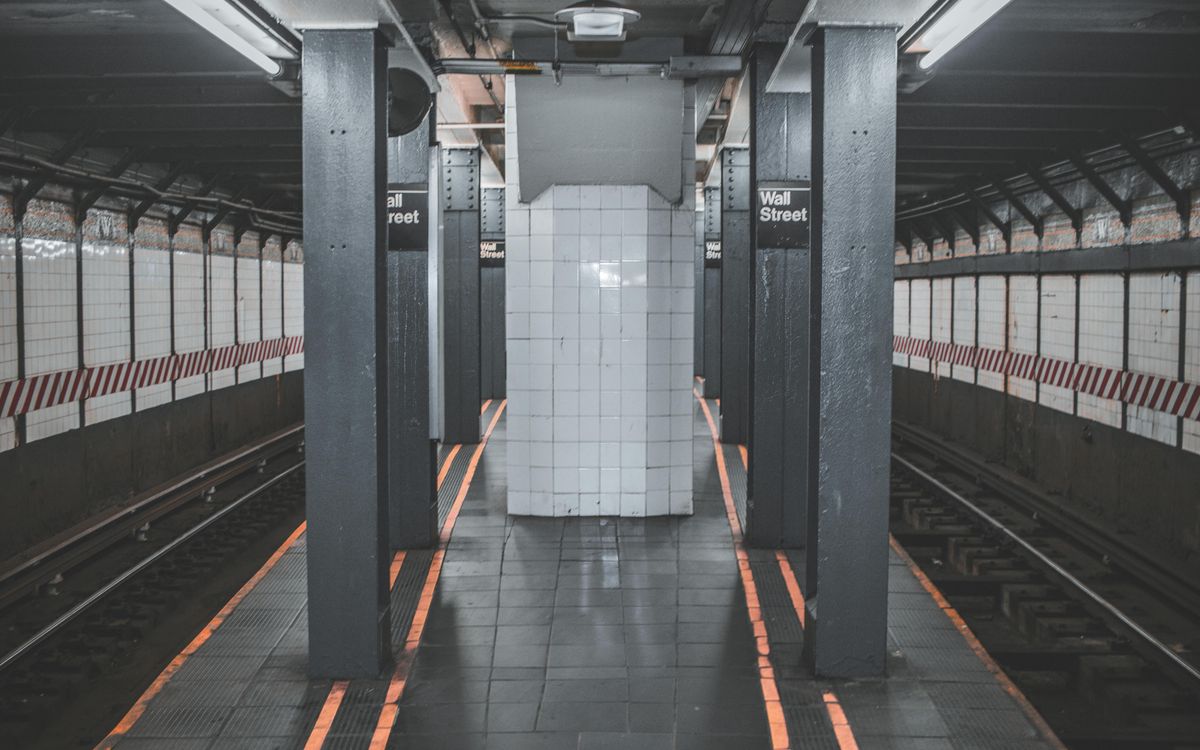
A chrome, unmarked, ghostly subway train that runs through the Stockholm underground late at night, carrying only the dead. Its most reliable stop, people say, is Kymlinge — a real abandoned subway station, built but never opened. Stand on the platform at Kymlinge late enough, the legend goes, and the Silver Arrow will stop. If it does, don't get on.
The Stockholm subway authority denies that any such train exists. Which is, per the legend's enthusiasts, exactly what they would say.
🇸🇦 Abu Fanous — the Lantern Holder (Saudi Arabia)
A mysterious floating light, seen at night in the Saudi deserts. Locals say that if you follow it — and the temptation to follow a single light in absolute darkness is apparently considerable — it will lead you deep into the dunes, off any recognizable route, until you can't find your way back. A classic spooky story, meaningfully older than any written record, but also one with a very practical function: if you get lost out there, don't chase any lights. They are not what they seem.
🇳🇿 The Patupaiarehe (New Zealand)
Fair-skinned, red-haired figures in Māori legend who live in the mists on mountaintops. They are said to take children who wander into the fog, particularly on Mount Pirongia. There is a specific genre of warning given to hikers by older locals — part cautionary, part genuinely unnerved — about not going up into the mist alone, regardless of what the weather says. The Patupaiarehe are not, generally, described as evil. They just take you with them, and you don't come back.
🇷🇺 The Black Volga (Soviet-era Russia & Eastern Europe)
During the Soviet era, parents across several Eastern Bloc countries warned their children about the Black Volga — a dark GAZ-24 sedan that, according to the legend, cruised cities at night abducting children to harvest their organs for a dying Soviet official. Sightings were reported for decades, well into the 1980s. When one Black Volga was "damaged" or "destroyed," another identical one would appear. The legend traveled across borders and language barriers with unusual speed for the era, which is partly what gave it its power.
🇺🇸 The Headless Horseman (United States)
An older legend than most Americans realize. A Hessian mercenary, fighting for the British during the Revolutionary War, is decapitated by a cannonball in battle. His unit is forced to retreat before they can bury him. He now haunts the Sleepy Hollow countryside, looking for his head — and, according to the legend, for victims to take in the meantime. Washington Irving's 1820 short story made him famous; the oral tradition is much older, and the region really did have Hessian casualties.
🇳🇴 The Monk of Nidaros Cathedral (Norway)
A ghost of a bleeding monk, said to have died by having his throat slit, who occasionally appears inside Nidaros Cathedral in Trondheim. The first sighting on record was in 1924, when parishioners reported that during a sermon, the Monk approached the priest and appeared to try to strangle him mid-psalm. Most of his later appearances have been quieter — showing up in a private gallery he couldn't have accessed, for example. In 1971, a Norwegian psychic named Anna Elisabeth Westerlund spent a night in the cathedral; she reported seeing the Monk holding a rope, and immediately began to feel as though she were being choked.
🇺🇸 The Phantom Ship of the Platte River (Wyoming)
For over a hundred years, a ghost ship has reportedly appeared on the Platte River in Wyoming — roughly every 25 years, by consistent accounts. It rises out of a strange mist and rapidly grows to the size of a full vessel. The sails and masts gradually become coated in frost. The crew, also covered in frost, stand on the deck, huddled around a corpse laid out on canvas. As the crew steps back, the witnesses see the face of the corpse. It is, reliably, someone they know.
The sighting is said to predict that person's imminent death. Accounts of it appear in Wyoming newspapers going back to the 1860s.
🇮🇪 The White Lady of Three Castle Head (Ireland)
A cliff walk in West Cork, Ireland, along the water — one of the most beautiful stretches of coastline in the country. Local legend says that if you encounter the White Lady on the path, you will be the next in your family to die. She is usually described as silent, sometimes as weeping.
The legend has more than folkloric weight in the region: about twenty years ago, a woman was murdered in the area. The day before her death, she had reportedly walked the Three Castle Head path. Locals quietly agree that she met the White Lady.
🇩🇪 The Burgfräulein (Germany)
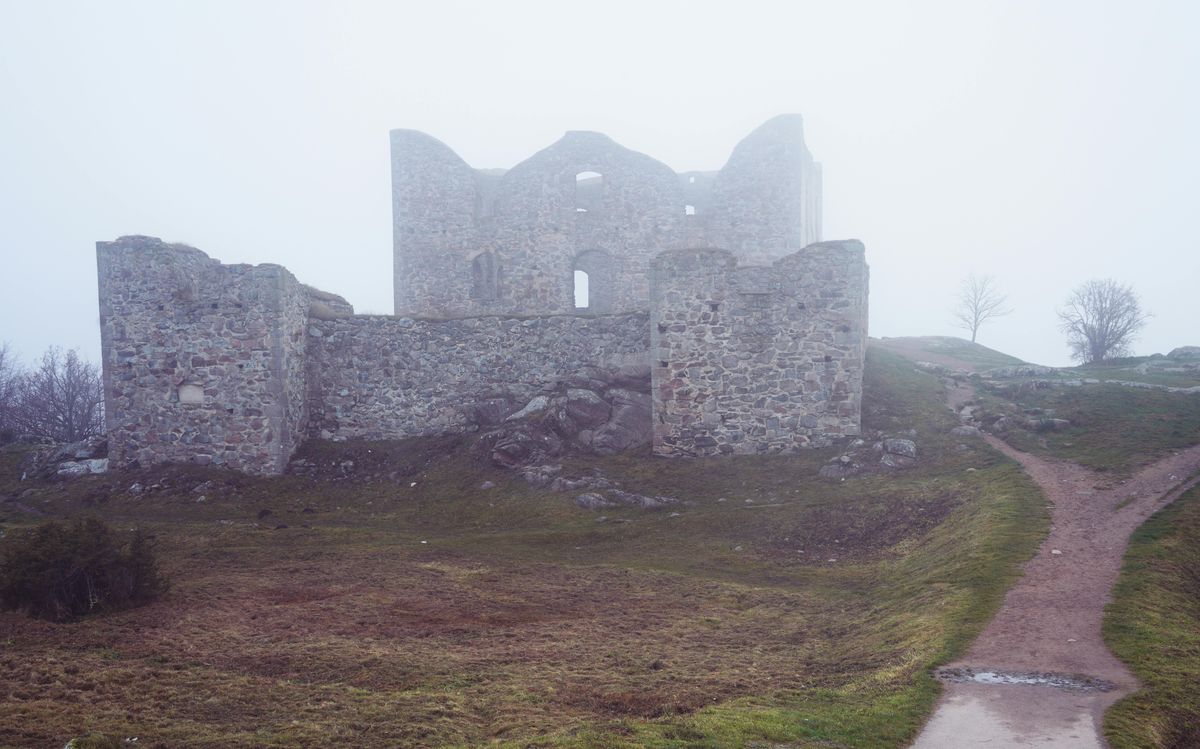
Germany has roughly 25,000 castles. About 40% of them are in ruins. Almost every one of these ruins, according to local legend, has a Burgfräulein — a young noblewoman, usually killed by a jealous knight from the neighboring castle, who now haunts the grounds. Others have the ghost of the mourning knight himself. The sheer scale of this is what makes it so specifically German: a country where there are enough castle ruins that it's statistically easier to ask which ones don't have a resident ghost. Spoiler: almost none.